




Custom Patches for Beginners: How to Design, Order, and Apply Them
首頁 > 新聞&活動 > Custom Patches for Beginners: How to Design, Order, and Apply Them
2026-03-26
Preface
Custom patches are a fun and creative way to personalize clothing, accessories, and even home décor. With a wide range of materials and designs, they offer endless possibilities for expression. Whether you’re customizing a jacket, creating branded apparel, or enhancing home items, custom patches provide a cost-effective and durable solution for adding a personal touch to your belongings.
What Are Custom Patches?
A custom patch is a decorative piece of fabric or material, personalized with a design, logo, or text, and typically sewn or ironed onto clothing, bags, hats, or other fabrics. These patches are often used to enhance a personal or corporate brand, represent a team, or simply add flair to clothing or accessories.
Types of Custom Patches: Embroidered, Woven, PVC, and More
- Embroidered patches: Created with threads stitched onto a backing fabric.
- Woven patches: Features finer details through tightly woven threads, offering a smooth, flat surface.
- PVC patches: Made from soft, durable rubber, these are ideal for detailed designs.
- Printed patches: Typically used for intricate designs or full-color images.
Custom patches are widely used for branding purposes, team uniforms, or personal items due to their versatility, affordability, and ease of application. They offer a cost-effective solution to customize apparel and accessories without the need for expensive or permanent alterations.
Common Uses of Custom Patches
- Custom Patches for Clothing: Jackets, Hats, Bags, and More—Custom patches are commonly used in fashion to add logos, designs, and slogans to jackets, hats, backpacks, jeans, and other apparel.
- Custom Patches for Teams and Organizations: Logos, Slogans, and Insignias—Many sports teams and organizations use custom patches to showcase their logos, mascots, or slogans.
- Custom Patches in Home Décor and Crafting: Custom patches can also be used creatively in home décor. For instance, they can be added to pillows, rugs, or blankets to enhance the aesthetic value or personalize home items.
- How Custom Patches Can Be Used for Promotions and Marketing: Custom patches are a great promotional tool for businesses. Companies often use patches as part of their marketing campaigns, giving them out at events or using them as giveaways to increase brand awareness.
How to Create Custom Patches?
Designing Your Patch: From Concept to Artwork
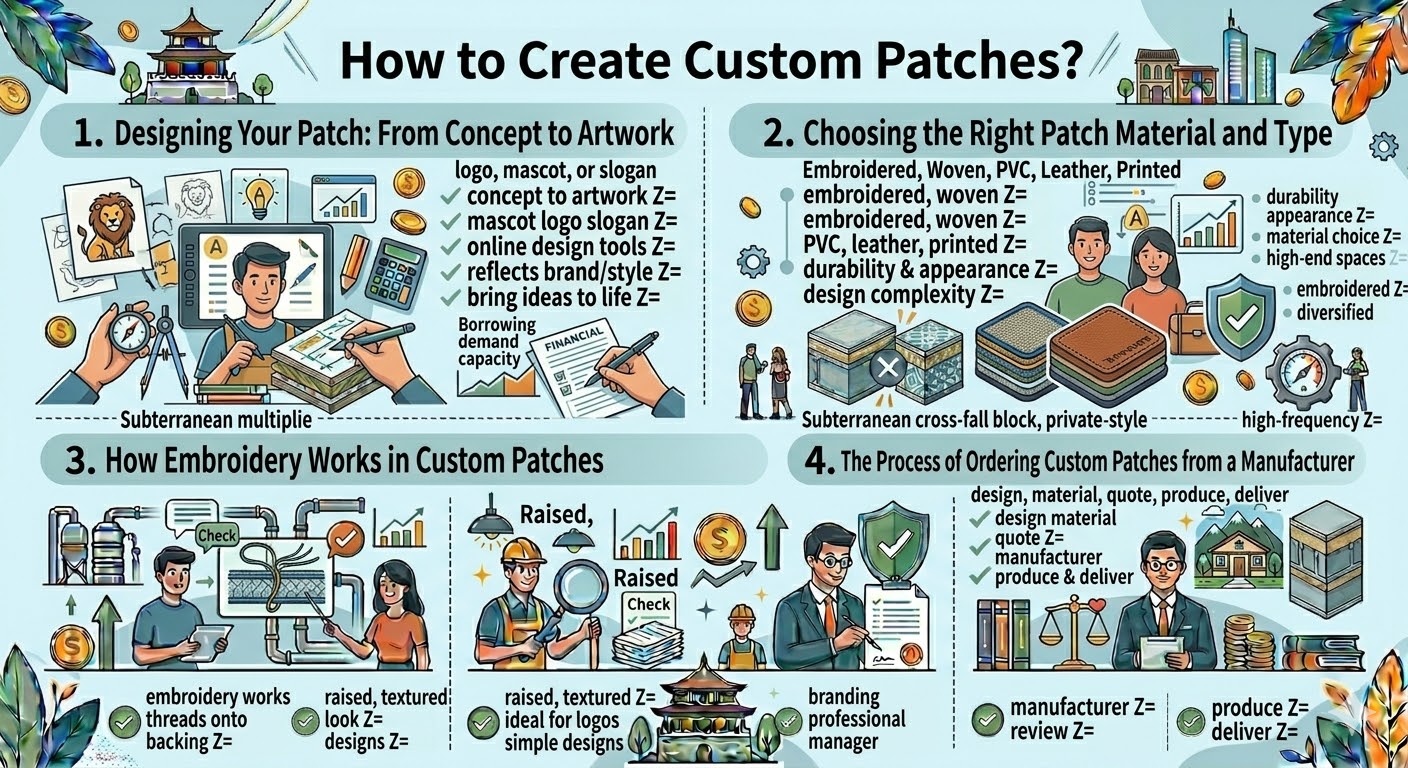
The process of creating a custom patch begins with designing a concept. This can include a logo, mascot, or slogan that reflects your brand or personal style. Many manufacturers offer online design tools or collaborate with clients to bring their ideas to life.
Choosing the Right Patch Material and Type
When creating a custom patch, selecting the right material is crucial for durability, appearance, and functionality. Choose from embroidered, woven, PVC, leather, or printed patches, depending on your design's complexity and the intended use of the patch.
How Embroidery Works in Custom Patches
Embroidery is one of the most popular methods for creating custom patches. Threads are stitched onto a backing fabric to create the design. The stitching gives the patch a raised, textured look and is ideal for logos and simple designs.
The Process of Ordering Custom Patches from a Manufacturer
To order custom patches, you need to provide your design to a patch manufacturer. They will review the design, suggest materials, and provide a quote. After confirming the design and quantity, the manufacturer will produce the patches and deliver them according to your timeline.
Custom Patch Styles and Types
Embroidered Patches vs. Woven Patches: What's the Difference?
Embroidered patches use thicker threads and offer a 3D effect. Woven patches are made with finer threads and offer a flat, detailed design, ideal for intricate artwork or smaller text.
PVC, Leather, and Printed Patches: Unique Options for Different Needs
PVC patches are durable, flexible, and weather-resistant, great for outdoor or rugged uses. Leather patches provide a premium, natural feel, ideal for high-end apparel or fashion accessories. Printed patches are used for detailed designs, logos, or full-color images.
Choosing Between Iron-On, Sew-On, or Velcro Patches
Iron-on patches are easy to apply using heat but may not be as durable as sewn-on patches. Sew-on patches provide a more permanent attachment, offering durability and long-lasting results. Velcro patches are removable and ideal for temporary use or customization.
3D Patches and Other Special Techniques
3D patches are raised and give a dynamic look, perfect for logos, mascots, or creative designs that stand out.
How to Apply Custom Patches?
Ironing on Custom Patches: Step-by-Step Instructions
Position the patch where you want it on the fabric. Set the iron to medium-high heat (without steam). Place a cloth over the patch and press the iron for 15-20 seconds. Allow the patch to cool before moving the fabric.
Sewing Custom Patches: Tips for a Long-Lasting Application
Use a matching thread to sew the edges of the patch onto the fabric. Double-check placement to ensure the patch is properly aligned. Sew securely along the edges for a durable and long-lasting attachment.
The Best Method for Attaching Custom Patches to Different Fabrics
The method you choose for attaching a patch (iron-on, sew-on, or Velcro) will depend on the fabric type and whether you want a permanent or removable patch.
How to Ensure Your Custom Patch Stays Secure
To ensure that your patch stays in place, always follow the correct application method, and consider stitching the patch even if it’s ironed on to prevent peeling over time.
Advantages of Using Custom Patches
- Cost-Effective Branding and Customization: Custom patches are an affordable way to personalize items, add logos or designs, and enhance your brand presence.
- Durability and Versatility of Custom Patches: Custom patches are highly durable and versatile, suitable for a wide range of materials and applications, from clothing to accessories to home décor.
- Custom Patches for Promoting Team Spirit and Unity: Patches are great for enhancing team spirit and unity, as they can represent shared values, logos, or symbols for clubs, teams, or organizations.
- The Unique, Personal Touch That Custom Patches Add to Your Items: Custom patches give a unique and personal touch to any item, allowing individuals or businesses to express creativity and individuality.
How to Care for Custom Patches?
Cleaning and Maintaining Custom Patches on Clothing
To care for custom patches, machine wash on a gentle cycle or hand wash the fabric. Avoid using harsh chemicals or bleach that could damage the patch.
Preventing Damage to Custom Patches (Fading, Fraying, or Detachment)
Regularly check patches for fraying or detachment. Keep items with patches away from excessive friction or high heat, which could cause fading or wear.
How to Store Items with Custom Patches to Avoid Damage
Store items with custom patches in a cool, dry place. Avoid folding them in ways that could distort the patch’s shape.
Popular Designs for Custom Patches
Trendy Chenille Patch Designs for Clothing and Accessories
Popular designs include logos, text, vintage graphics, and fun illustrations. These can be customized to fit personal preferences or brand identities.
How to Incorporate Custom Patches into Modern Fashion Trends
Incorporating patches into streetwear, jackets, backpacks, and other accessories is a trendy way to add a creative, personalized touch to your look.
The Resurgence of Vintage and Retro Designs in Custom Patches
Vintage and retro designs have made a comeback in custom patches, particularly in casual wear and street fashion, adding a nostalgic flair to modern style.
Where to Buy Custom Patches
Top Retailers and Online Shops for Custom Patches
You can find custom patches through retailers like Etsy, Amazon, or specialty craft stores. These platforms offer a wide variety of options
How to Choose a Reliable Custom Patch Manufacturer
Look for manufacturers with good reviews and experience. Ensure they offer customization options and can meet your desired turnaround time.
Pricing and Options for Bulk Orders or Custom Orders of Patches
Many manufacturers offer bulk discounts, and the pricing can vary depending on design complexity, material choice, and quantity.
Conclusion
Custom patches are a fun and creative way to personalize clothing, accessories, and even home décor. With a wide range of materials and designs, they offer endless possibilities for expression. Whether you’re customizing a jacket, creating branded apparel, or enhancing home items, custom patches provide a cost-effective and durable solution for adding a personal touch to your belongings.
Common QA
Q1: What is a custom patch?
A: A custom patch is a fabric decoration that can be personalized with your own design, logo, or text. They can be embroidered, woven, PVC, or printed, and are typically applied to clothing, bags, hats, and other fabrics.
Q2: How do I design my own custom patch?
A: You can design your custom patch by creating a digital artwork that reflects your brand, logo, or personal style. Many manufacturers provide online tools or work with you to bring your design to life.
Q3: What types of materials are used for custom patches?
A: Common materials include embroidered threads, woven fabrics, PVC, leather, and felt. The choice of material depends on the desired look, durability, and purpose of the patch.
Q4: How do I apply custom patches to clothing?
A: Custom patches can be applied in several ways, such as ironing them on (iron-on patches), sewing them on, or using Velcro for removable patches. The method you choose depends on the material of the clothing and the type of patch.
Q5: How do I care for custom patches?
A: To care for custom patches, gently hand wash or machine wash the fabric on a gentle cycle, and avoid using harsh chemicals. To prevent damage, avoid exposing patches to excessive friction or heat. Always check the patch regularly to ensure it remains securely attached.